



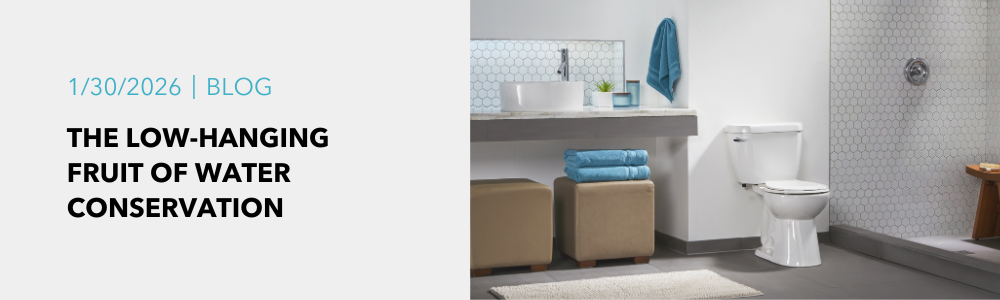
When people think about saving water, they picture shorter showers, turning off the tap while brushing their teeth, or investing in fancy irrigation systems.
Meanwhile, the biggest water-waster in the house is quietly sitting in the bathroom.
The Hidden Water Hog in Your Home
Toilets are the number one water user inside the average home, accounting for nearly 30% of indoor water use. In older homes, that number can be even higher.
Many homes are still running toilets that use 1.6 gallons per flush (GPF). Compare that to modern high-efficiency models that use 1.28 GPF or less — and you start to see just how much water is literally being flushed away.
Why Toilet Upgrades Are So Effective
Unlike behavior-based conservation (shorter showers, fewer laundry loads), upgrading a toilet doesn’t rely on someone remembering to change habits. Once it’s installed, the savings happen automatically — every single flush.
That makes toilet replacement one of the simplest and most reliable ways to reduce water use.
One upgrade can save:
- Thousands of gallons of water per year
- Noticeable money on water bills
- Strain on local water and wastewater systems
Modern Toilets Aren’t What They Used to Be
Some people still picture early “low-flow” toilets that needed two or three flushes to get the job done. That reputation has stuck around longer than it should have.
Today’s high-efficiency toilets are engineered with:
- Advanced bowl and trapway design
- Powerful, optimized flush systems. For example, see Niagara’s patented Stealth Technology®, which is a vacuum-assisted flush system that uses only 0.8 GPF.
- Improved glazing that helps keep bowls cleaner